I am trained and experienced in a range of evidence based therapeutic approaches including the following:
- Acceptance and Compassionate Therapy (ACT)
- Cognitive Analytical Therapy (CAT)
- Cognitive Behaviour Therapy (CBT)
- Compassion Focused Therapy (CFT)
- EMDR
- Exposure Response Prevention (ERP)
- Trauma -Focused CBT
- Mindfulness-Based Cognitive Therapy (MBCT)
- Supervision and Consultancy

Acceptance and Compassionate Therapy (ACT)
ACT is a talking therapy approach that is based on the idea that moving away from your inner experiences by ignoring or avoiding them only makes the struggles even harder but acknowledging, observing and accepting these experiences enables you to live alongside them, thereby taking the edge off the associated distress. This potentially leads to a commitment to taking action and making improvements in all areas of your life.
ACT has been used to effectively treat a wide range of difficulties including (coping with) long term physical health conditions e.g. Diabetes, Chronic Pain, Migraines, IBS as well as OCD, and Chronic Fatigue. It is also effective as a life affirming and inspirational perspective of how to live your life in a stress-free way.
ACT encourages a person to embrace their thoughts and feelings rather than fighting or feeling bad for experiencing them thereby increasing their distress. After all, ‘running away’ from any problem only increases the distance from the solution. The easiest way to escape from the problem is to get close to it so as to resolve it properly.
Useful Links
Compassion Focused Therapy (CFT)
Compassion Focused Therapy (CFT) is a psychological therapy, originally developed to help people with shame and self-criticism. CFT centres on the three systems of emotional regulation that has evolved in humans over time: the threat (protector) system, the drive (resource seeking) system and the soothing (nurturing, calming system).
Compassion focus therapy can be helpful to people who find it challenging to understand, feel or express compassion, so that therapy can be a safe place for self-exploration, self-awareness and self-compassion. These difficulties tend to be deep-seated and longstanding so these destructive thoughts, feelings and behaviours may be part of who they are but are not helping them to function as worthwhile and deserving individuals. It can be particularly helpful for those dealing with feelings of low self-worth/esteem who could benefit from exploring barriers and learning to develop a compassionate view of themselves, others and the world which might hitherto getting in the way of positive change.
Compassion focused therapy combines mindfulness skills with the practice of self-acceptance with the aim of accepting your thoughts, feelings and commitment plays a key role.

Mindfulness Therapies
This a therapeutic method which can be either a stand-alone therapy or used as an adjunct to other therapies e.g. ACT; CBT; DBT.
Cognitive Behavioural Therapy (CBT)
CBT is one of the strongest evidence base psychological therapies to treat a wide range of difficulties and is endorsed by NICE which is the governing body for the NHS. A CBT therapist is shown to be an effective way of treating a number of different mental health conditions including depression, generalised anxiety disorder, panic disorder and stress.
How CBT works?
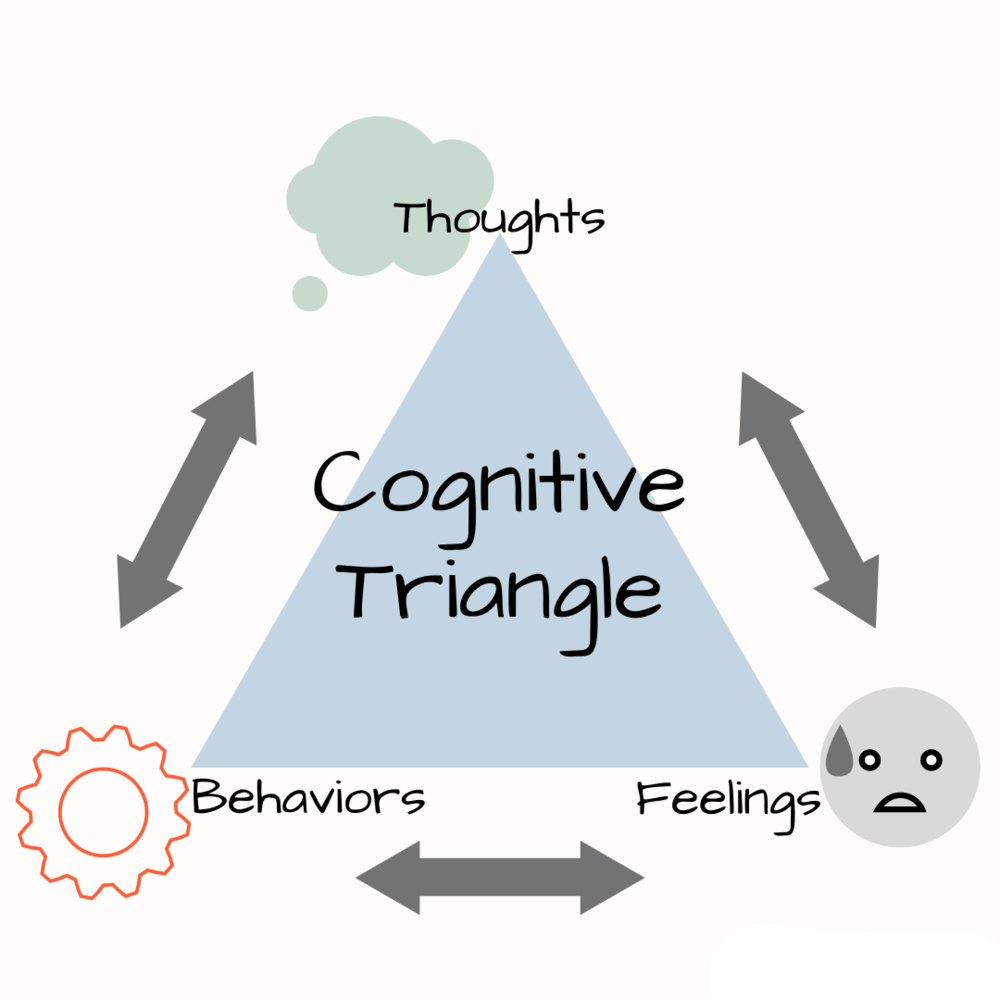
Traditional CBT is based on the idea that our thoughts, feelings and behaviours are interconnected and so can trap us in a vicious cycle. In its varied forms, CBT aims to help you deal with overwhelming mental health problems in a more positive way by breaking these vicious cycles and to develop more helpful ways of responding to distressing situations.
Although it is focused on the ‘here and now’ difficulties it also draws on your past experiences which may help to understand how your beliefs about yourself, world and future have developed and the impact these may be having on your current experiences and ways of challenging these using different cognitive and behavioural therapies.
Useful Links
CBT – NHS – How CBT works
Mindfulness-Based Cognitive Therapy (MBCT)
MBCT is a type of therapy which builds upon the principles of cognitive therapy and mindfulness meditation practices which involves teaching individuals to consciously pay attention to their thoughts and feelings which contributes to an acceptance of the self, without attaching value judgement.
MBCT was developed by therapists Zindel Segal, Mark Williams, and John Teasdale. They felt that by integrating cognitive therapy with a program developed in 1979 by Jon Kabat-Zinn called mindfulness-based stress reduction (MBSR), therapy could be more effective for the treatment of stress, anxiety, depression and more.

Eye Movement Desensitisation Reprocessing Therapy (EMDR)
EMDR was originally developed to overcome trauma and is recommended by the National Institute for Health and Care Excellence (NICE) for the successful treatment of PTSD and more complex traumas (attachment/developmental traumatic experiences). It is therefore an extensively researched, effective therapeutic method proven to help people recover from trauma and other distressing life experiences.
In recent years, it has increasingly been used to treat many other clinical psychological disorders such as obsessive compulsive disorder, anxiety disorders, phobias and depression.
What is EMDR?
The goal of EMDR therapy sessions is to properly process the traumatic memories and store them in the rightful place in the brain so that these memories are not triggered or re-experienced and for the brain to activate its natural healing process. This reduces their impact, the distress they cause and help individuals to move on from the past.
It is an experiential therapy which means that it does not rely on talking in detail about the distressing experience or completing homework tasks. Rather, it is an eight-phase approach which involves bilateral stimulation (moving eyes from side to side, tapping movements or visual/auditory input) in order to relieve the distress of a traumatic memory so enabling the brain to resume its natural healing process.

Supervision and Consultancy
I offer clinical supervision, supervisory supervision and case consultation to assistant and trainee clinical psychologist, newly qualified and more experienced psychologists. I also provide specialist CBT supervision to CBT therapists.