
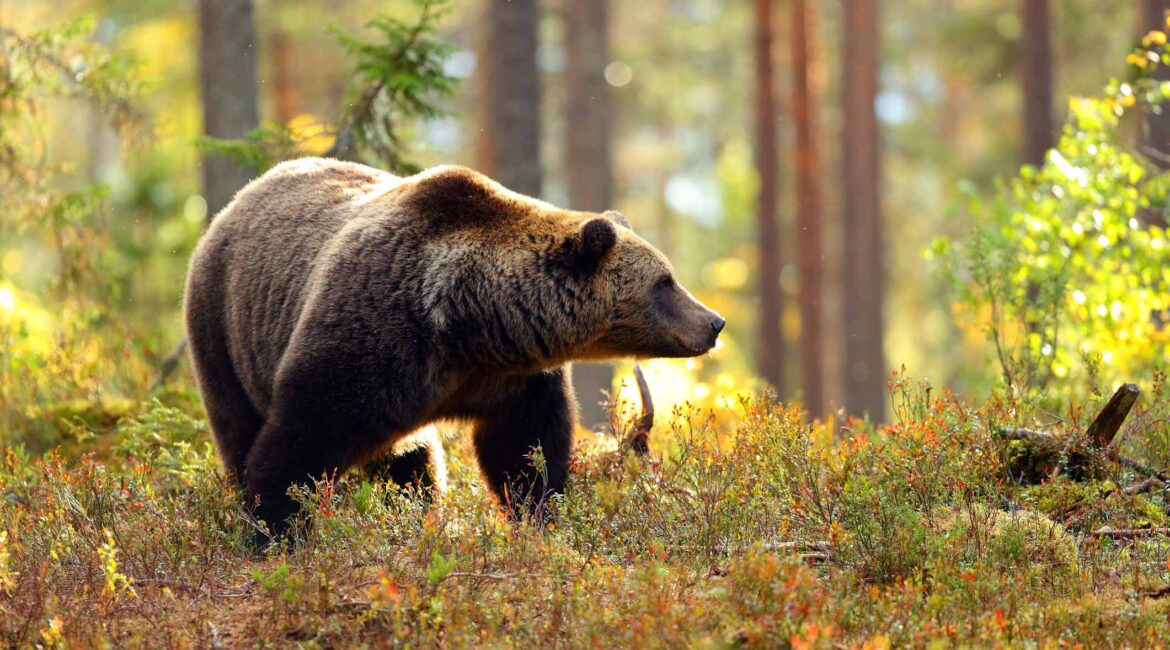
Once upon a time … there were humans on the savannah. It’s a dangerous world. We need to find food, we need to protect ourselves from predators, we need shelter, we need to find a mate. And we do this by clanning together in tribes of 70-100 people. No tribe, no reproduction. No tribe, no sharing of resources. No tribe, no safety from the bears. We survive everything, including trauma, by being in a tribe.
So we’re humans on the savannah. We’re not bigger or faster than other predators, and we don’t have fangs or claws. Our safety is in numbers and in being alert to threat. That hypervigilance might stop us sleeping at night, it might make us jittery and anxious, but better a nervous human than a dead one. We communicate complexly with other humans, live collaboratively: this is how we survive. Our tribe is everything. We cannot survive alone, and so we must avoid isolation at all costs. Shame is the means through which we learn to avoid behaviours which would have us ejected from our tribe. Shame is a survival mechanism.
So we’re humans on the savannah. Every day, the same dilemma: we need to go out to hunt and to gather. But going out – out there, amongst predators with fangs and claws, is dangerous. A bear swipe might mean death now, or later via infection. But if we stay in the camp we’ll starve. In the savannah heat, food spoils quickly, so what we kill today, we eat today. And tomorrow we go out again. Berries or bears: approach or avoid? Every day we have to face this dilemma. Do we avoid danger or do we seek resources?
So we’re humans on the savannah and today we’re down by the river looking for berries. But there’s a sound in the bushes.
We go still. We strain eyes and ears to locate the threat. And before we know it, we’re off in flight. Run. Get away. There’s a bear in the bushes, so we need to flee from it before it even sees us. React now, think later: better safe than sorry. Being preemptively fearful gives us a survival advantage: we avoid the places where bears lurk. Anxiety is a survival mechanism. Then if unwittingly we stumble into bear territory, we avoid – instantly, over-reactively – with flight.
In that moment our energy and attention are diverted from talking, collaborating, seeking, analysing, gathering – fine motor skills, concentration skills, visual skills, memory skills, language skills. We stop thinking and start doing. Blood and oxygen surge through our legs to make a run for it: heart-pounding, ‘get me out of here’ panic. That immediate shift in our physiology, which we now call ‘being triggered’, evolved over millions of years to give us instant reflexes and to maximise our chances of survival. We shut off our thoughtful, seeking front brain and activate instead back brain- driven instincts. We mobilise to survive. This isn’t the brain and body gone wrong – this is the brain and body gone right.
The sudden switch to flight generates adrenaline and noradrenaline, and a few minutes later, cortisol. Energy is released into the body, and in running we burn it off. We evade the bear, get to safety, stop running, and start to breathe more slowly. We calm. All is well. Shortly we are back to baseline, and our front brain takes charge again to hunt collaboratively for berries, focusing again on advancing life, not just avoiding death. No harm is done. We have evolved for these ‘high intensity intervals’.
But today the bear is too close for flight. It’s on us already. Growling, grunting, out of the trees it comes at us. Flight is not an option. We don’t choose what to do next – we just react, again instinctively, with subtle but profound shifts in our energy flow, from legs to arms, from brain to brawn. We wield our spear, poke it towards the bear, become bold and fierce. This is no random ‘anger issue’: it’s pure survival. It’s what we’re supposed to do when faced with threat. The fight response is instinct. As the bear comes at us, we stab at it with our spear. It swipes back at us, mauls us a little. We jab back. It is nearly upon us, but at the last moment we fight it off enough to make a run for it.
So back we flee, not further into the forest, towards the danger – of course not! – but away, back to safety, back to our tribe. Instinctively we head back to people. We don’t cry for help until we’re nearly there – we don’t want to attract more danger. But then, ‘Bears!’ we yell, signalling our distress. ‘BEARS!!!’ We are seeking attention, communicating our plight, because we need to rouse support if we are to survive. And out comes our tribe to meet us, spears in hands, mobilised too to action: angry not with us for causing a fuss, but stirred to action against the bear, because their survival depends on it too. As a tribe we need bears to fear us, not to breach the camp. It’s on the entire tribe to rise up in defence: all for one, and one for all. And so the bear bounding behind us retreats, faced with humans-gone-large, humans- as-tribe, prey-turned-predators. One human looked like lunch, but together they look like trouble. So off it slinks, back to the woods. Together, facing it down, we are safe. We’ve won – an ‘act of triumph’.
To the centre of the camp we go, safe from the edges. Fire to warm us and protect us. Are you injured, are you hurt? What happened? Where? When? Then what? How? Did you? What next? We tell them our story and they tend to our wounds. We sit around the campfire and, with touch and eye contact and language and feeling, we create a narrative of the bear attack. This too is etched in our genes. If we don’t tell our story, if we don’t tell our tribe, then all of us are at risk. The tribe’s safety is in its health, its strength, its size. We can’t afford to lose anyone. We mustn’t let anyone else go out unwarned near those bushes, near those woods, near that river. Then together, the embers flickering as night falls, we decide together, as a tribe, what to do about the bear. Hunt it? Leave it be? Move camp tomorrow? Hunt and gather in groups? What’s the safest thing for us to do? There’s no shame in this for us. Everyone wants to know. Everyone wants to decide together. What hurts one hurts all. This is how we survive.
Or maybe on another day the bear is upon us, pouncing from the bushes, and knocks our spear clean from our hands. Then it pins us to the ground. No flight, no fight. So what to do? Again, primeval instincts kick in. We freeze. There is no hope of active resistance, of a mobilised response of arms and legs. So we switch instinctively, without thought, to the immobilisation of freeze and the evolutionarily ancient dorsal vagal nerve. It is a last-ditch attempt to survive. Our heart rate and breathing drop as our body conserves energy. Blood pressure reduces to minimise blood loss in case of injury. Endogenous opioids – homemade heroin – flood our system, numbing our senses, reducing pain, spacing us out. If we’re going to be eaten alive, at least we won’t feel it – and the analgesic effect allows us to remain completely still and death-like, fooling the predator. Psychologically this is what we call ‘dissociation’. We are watching ourselves from the outside, like it’s not happening to us. Our sense of self is removed. We go still and calm, even serene. There is zero motivation to move or act – just submit, play dead, go limp, and pretend even to ourselves that we’re not here.
It doesn’t always work – people die in bear attacks – but on this occasion it does. The bear responds to resistance: attack the thing that’s attacking it back or squirming to escape. With no movement, no struggle, the bear is confused and demotivated. Is it dead? Dead meat is dangerous meat. The bear’s kill instinct is muted. It hears a rustle in the bushes, smells a scent on the breeze. Its attention is distracted. If this prey is dead, it can return to it later. In the meantime, there’s live prey elsewhere. First things first. And so the bear lumbers away, losing interest, deceived by freeze. It’s a survival trick that many vertebrates have used for millions of years. Unlikely though it is, it’s persisted because it works: natural selection.
When we feel safe, slowly movement returns. Our attention focuses again on our surroundings and the haze clears a little from our head. Mobilised resources come back online in our body – adrenaline shocks us awake, and we shake and rush inside with panic and energy. Up on our feet, shaking, distressed now – and away. Running. Action. Back to camp. The terror pours out of us: ‘Bear! Bear!’ we scream as we approach the edge of the camp, attention-seeking in the very best sense of the phrase. It’s imperative that people see and hear. And they do, and we collapse in exhaustion into the arms of our tribe. What happened? When? Where? How did you? Where did the bear go? We shake and cry and babble together our narrative of our trauma in the woods, and they listen and hear and clean up the bear swipes from our skin, and we rest and shake some more and as night falls around the camp fire again we all make a plan, and together we face up to what we need to do, one for all and all for one, to be safe from the bears.
A bad thing happened. But we survived. We were able to reengage mobilised responses – to run back to camp. We then found safety in our tribe; we told our story; they tended to our wounds. And together we formulated a communal plan for future avoidance of threat. In such circumstances it’s unlikely that we would ever experience what we now call the ‘symptoms of trauma’. There is no need for our neurobiology to shift to ‘danger mode’, in preparation for imminent, persistent threat, if we are safe back in our tribe and there is a plan to defeat the bears. Being traumatised is what happens when we face distressing events without support, and with no prospect of a return to safety.
This is how our neurobiology evolved to deal with life-threat. The threats were real, and they were covered in fur. We survived with flight, fight or freeze, and we survived by returning to a supportive tribe who planned bear traps, bear hunts, bear patrols… or we chose to continue on our nomadic way to less bear-infested parts. The threat was real and obvious and everyone saw it, believed it, and took action on it – together. Back in the tribe, around the camp fire, we told our story, we processed our emotions, we repaired our body, and we felt safe in the midst of our people. We were able, neurobiologically, to move out of fight and flight (the amber zone of the sympathetic nervous system), or out of freeze (the red zone based in the dorsal vagus nerve), back into the green zone of social engagement and safety and the ventral vagus. Our entire physiology shifts contingent on our level of threat or safety, and being safe in the middle of our tribe, empowered to tackle the threat, is what keeps us safe from ongoing traumatisation. We are supported. We are able to tell our story. We are believed. And we face the threat as a community, together.
But how things change.
What happens if you don’t have a tribe to return to? What happens if – as in child sexual abuse – the bears live inside the camp? What happens if – as society’s default so often is – you scream ‘Bear!’ to your tribe and they respond with disbelief, or blame?
‘What are you talking about? The bears were just being bears. I’m sure they were trying to hug you, not hurt you. What is wrong with you that you don’t you like bears? Why are you making such a fuss? We need the bears to keep us safe from the cave lions – let them be. And what did you do to provoke the bear in the first place? Why were walking around with honey to attract them? Why were you even down by that part of the river anyway? Bears – really? Here? I don’t think so. Did anyone else even see the bears attack you? Don’t you think that maybe you’re making it all up? To avoid having to gather berries? To be the centre of attention?’
Growing up, I lived amongst bears. Bears mauled me, and no-one believed me. No-one protected me. No-one wanted to know. The bears were too big and strong and powerful, and anyway ‘Oh they look so cuuuuuute, all furry and teddy-bear like!’ I was so used to the bears that I became ‘fur-blind’ to danger, completely unable to defend myself against other predators. When the bears came for my honey, I gave it to them gladly, just so that they wouldn’t swipe. And then I gave it to anyone else who laid claim to it – my life, my resources, my gifts, my sense of self. I never had a concept that this was my honey, for my sustenance and support – if the bears wanted it, the bears would have it. No arguments. I began to offer it before anyone even asked: that felt safer, and the normative thing to do.
With no support back in the tribe, in amongst the bears, I never got the chance to sit around the campfire and tell my story. I doubted myself. The brain-fuzz from the freeze response, that flooding of endogenous opioids impaired my memory anyway. It wasn’t adaptive for me to remember bear swipes when I lived amongst bears, when I was dependent upon them in other ways for safety and protection. If no-one was going to believe me, if I would be blamed for complaining, then it served me better just to forget. Put up and shut up and assume that the fault is with me. Keep my secret and do everything in my power to hide my scars so that nobody would blame me for provoking the bears.
Into adulthood, responsible for gathering my own berries and roots, the problems persisted. I knew that the bears were out there. I had to stay alert, hypervigilant. Where possible I avoided the bushes, even without knowing why. But the bushes contained the berries. I was caught, constantly, in a paradox that I could not solve. Focus on the berries and risk the bears. Or focus on the bears and go without berries. It was no wonder that I starved – emotionally, but physically sometimes too, my life empty of resources. Weak and powerless, I was further ostracised by the tribe, proving to them that I was of little value, too afraid to hunt and gather, too unskilled and unconfident and too often unwell. Everything in my instincts told me, even unconsciously, to stay sick in the centre, rather than risk going out to hunt and gather. I became dependent on the goodwill of some in the tribe, while others saw me as needy and pathetic and self-absorbed and selfish and lazy and ‘odd’. Why couldn’t I just be like my peers, who weren’t afraid of bears, who had fine spears and who knew where to find the best berries? Why was I so poor and useless? What was wrong with me?
Why are you like this? people would say, because to them I was choosing not to contribute to tribe life, but simply to scrounge off their bounty. Once or twice I tried to say, ‘Because of the bears …’ but quickly I was closed down: Don’t go blaming those teddy bears for all your problems. It’s your choice how you live. Get a grip and stop being so screwed up. I learned to make myself useful in the tribe so as not to be excluded completely: I’ll give you my honey, I’ll carry your water, I’ll let you sleep with me, I’ll do whatever you want me to do – so that you don’t push me out alone onto the savannah where the bears and lions and hyenas roam. A few bears in the camp are safer than all the other predators outside. So I’ll take on the shame-stance of the ‘wrong one’ so that I get to remain. What’s a few bear swipes when I could be dead? I’ll even be grateful. I’ll sing the praises of the bears, who keep me safe.
I carry with me though the scars from the bear maulings. But I cannot see them for what they are. Instead I assume that they are deformities which point to my intrinsic ugliness. Or they are some strange kind of skin disease, which people retreat from. To cover their guilt, the bears deride me for being congenitally disfigured – ‘damaged goods’.
It’s not helpful for me to remember what happened in the woods, and it’s not easy to remember something that everyone else in my tribe denies. No wonder I struggle with amnesia. Was it really that bad? Did it even happen? Doesn’t everyone get mauled by bears from time to time? Isn’t it just my own fault for not jumping out of the way? Everything points back to it being my shame. If only I had been ‘better’ I wouldn’t have been mauled. I must have invited it. I was too stupid to avoid it. As a liability to my tribe, perhaps I’m better off dead.
It took many years for me to see that I had lived amongst bears all my life. I had to realise two key things: firstly, that my behaviours (‘my mental health difficulties’) were entirely logical in the light of being mauled by bears; and secondly therefore that the problem wasn’t in me, but in in not having yet found safety in an accepting, healing tribe. My brain and body were simply responding out of their evolutionary programming: I was neither bad nor mad. My neurobiology was simply waiting to finish its inbuilt sequence of response to life threat, by feeling safe again in the midst of the tribe.
We have focused historically on ‘trauma’ as being only the actual event in the woods with the bears. But we are traumatised not by the bear attack itself, but by not being able to get back to safety afterwards: the lack of a supportive tribe, who tend to our wounds, hear our story, and take action with us. The trauma is not in the event. It’s in the lack of resolution. It’s in the lack of human connection where we are able to process what has happened to us and we feel supported in staying safe in the future. So much of our trauma is in the aloneness, not just during the event itself but in its immediate and ongoing aftermath.
The only setting in which I have been able to fulfil most of this completion cycle is in therapy. In our modern tribe (which really are no tribes at all), we are so unused to post-maul care that we need an entire profession dedicated solely to providing a healing context. Our therapists are our ancestral witch- doctors, stepping in because of the failure of the tribe to do what should be done every single time a bear attacks. Our failure to heal from trauma lies as much, if not more, with the tribe as a whole as it does with us as individuals, and yet our mental health care system is based on the premise that the problem is in our brains alone. Even the existence of bears is disavowed by some, most noticeably psychiatry with its heritage in Freud’s dismissal of child sexual abuse as fantasy. We have all, as a society, become fur-blind, and so the effects of trauma are seen as mental illness rather than the body and brain’s best attempts to stay safe after being mauled – often repeatedly – by bears.
Recovery from trauma starts with acknowledging the existence of bears. It requires the involvement of a safe tribe. It necessitates the telling of our story and the healing of our wounds. And it requires action to keep us safe from further bear attacks. In that sense, it’s not difficult. Over millions of years we have evolved a clear system for dealing with trauma. We just started to think that we could do it without people, with drugs and techniques and programmes, and without ever going on a bear hunt and providing basic safety for the vulnerable in our tribe.
But maybe we could reclaim our evolutionary heritage. We could begin by calling a bear a bear; by stopping blaming ourselves for being mauled by bears; and by being the safe tribe we all need to be for one another.
